
April 8, 2026
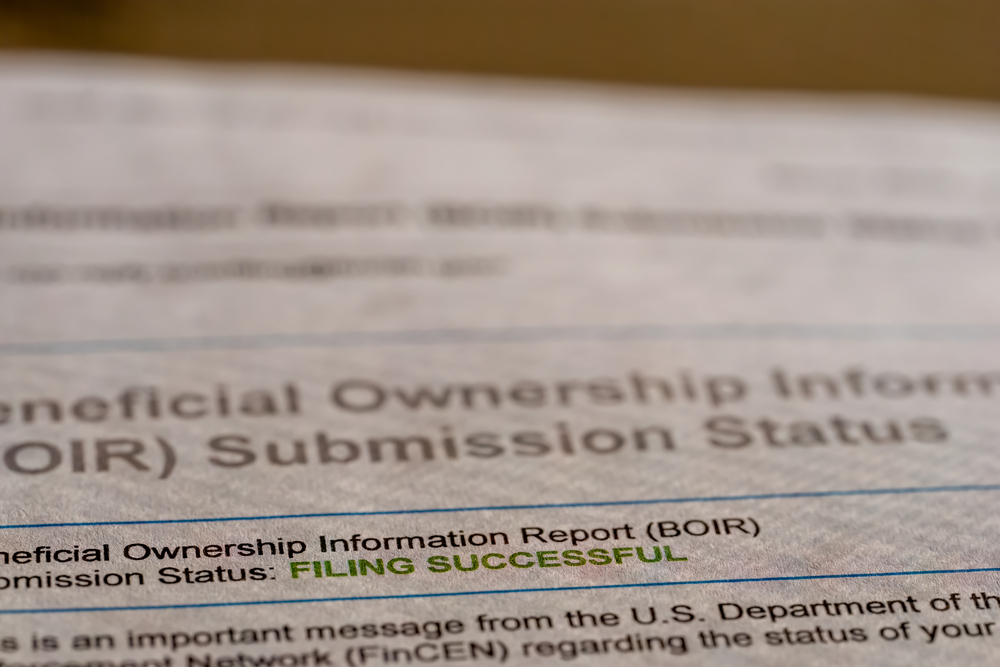
What is Beneficial Ownership Information (BOI) Reporting and Who Needs to File?
The Corporate Transparency Act introduced a new federal requirement that affects millions of U.S. businesses. If you own or operate an LLC, corporation, or similar entity, you now need to disclose information about who owns and controls your company to the federal government. This requirement is called beneficial ownership information reporting, and it applies to most small businesses formed by filing with a state.
Many business owners feel uncertain about this filing obligation. The rules are new, the terminology can be confusing, and the penalties for non-compliance are serious. Understanding what beneficial ownership information is, who needs to file, and how to meet your obligations protects your business from significant fines and legal consequences.
This guide explains beneficial ownership information reporting in plain language. You’ll learn what the Corporate Transparency Act requires, which companies must file, who qualifies as a beneficial owner, what information you need to submit, and how to stay compliant with federal deadlines.
The Corporate Transparency Act and Why It Matters to Your Business
The Corporate Transparency Act is federal legislation designed to prevent money laundering, fraud, tax evasion, and other illicit financial activities. Enacted as part of the National Defense Authorization Act for Fiscal Year 2021, the CTA requires certain businesses to disclose who actually owns and controls them.
Before this law, it was possible to form a company in the United States without revealing who owned it. This anonymity made it easier for criminals to hide assets, launder money, and conduct illegal operations behind legitimate-looking business structures. The CTA closes this gap by requiring ownership transparency.
The Financial Crimes Enforcement Network (FinCEN), a bureau of the U.S. Department of the Treasury, collects and maintains beneficial ownership information in a secure, non-public database. Law enforcement agencies, financial institutions conducting due diligence with customer consent, and federal regulators can access this information under specific circumstances. The general public cannot view these reports.
This requirement affects everyday business owners, not just large corporations or high-risk industries. If you formed an LLC to run a consulting business, own rental properties, or operate a retail shop, you likely need to file a beneficial ownership information report. The law applies to most small businesses, single-member LLCs, and corporations regardless of size or revenue.
FinCEN began accepting beneficial ownership information reports on January 1, 2024. Since then, millions of businesses have filed reports disclosing their ownership structures. Compliance is not optional. The statute establishes civil penalties of up to $500 per day for violations and criminal penalties including fines up to $10,000 and imprisonment for willful non-compliance.
Understanding your obligations under the Corporate Transparency Act is now a standard part of business compliance. The sooner you determine whether your company must file and gather the required information, the better protected you are from penalties and enforcement actions.
Which Companies Must File Beneficial Ownership Information Reports
The Corporate Transparency Act defines reporting companies as corporations, limited liability companies, and similar entities created by filing a document with a secretary of state or similar office. This includes most LLCs and corporations formed in any U.S. state or territory. It also includes foreign companies registered to do business in the United States.
If you filed articles of organization for an LLC or articles of incorporation for a corporation with a state office, your company is likely a reporting company. The filing requirement is based on how the entity was created, not on its business activities or size.
However, the CTA establishes 23 categories of exempt entities that do not need to file beneficial ownership information reports. These exemptions cover entities already subject to substantial federal or state regulation and oversight. Understanding these exemptions helps you determine whether your business must file.
Large Operating Companies: Companies with more than 20 full-time employees in the United States, more than $5 million in gross receipts or sales reported on the previous year’s federal tax return, and an operating presence at a physical office within the United States are exempt.
Regulated Financial Institutions: Banks, credit unions, depository institution holding companies, money services businesses, broker-dealers, securities exchanges, investment companies, investment advisers, and insurance companies are exempt because they already report ownership information to federal regulators.
Publicly Traded Companies: Companies with securities listed on a national securities exchange, including their wholly owned subsidiaries, are exempt because ownership information is already publicly available through SEC filings.
Governmental Entities: Federal, state, local, and tribal governmental authorities are exempt.
Tax-Exempt Nonprofits: Organizations exempt from federal income tax under sections 501(c) or 527 of the Internal Revenue Code are exempt, provided they meet certain additional requirements.
Other Exempt Entities: Additional exemptions cover entities such as accounting firms, public utilities, pooled investment vehicles, subsidiaries of certain exempt entities, and inactive entities that meet specific criteria.
If your company does not qualify for any of these 23 exemptions, it is a reporting company and must file a beneficial ownership information report with FinCEN. The exemptions are narrow and specific. Most small businesses, including single-member LLCs and closely held corporations, must file.
A simple self-assessment can help you determine your filing obligation. Ask yourself: Did I create this entity by filing formation documents with a state office? Does the company fit into one of the 23 exempt categories? If you filed with a state and do not qualify for an exemption, you need to file a beneficial ownership information report.
Who Qualifies as a Beneficial Owner Under the CTA
The Corporate Transparency Act requires reporting companies to identify their beneficial owners. A beneficial owner is any individual who directly or indirectly owns at least 25 percent of the ownership interests of the company or exercises substantial control over the company.
This definition focuses on individuals, not other entities. If a corporation owns 30 percent of your LLC, you must identify the individuals who ultimately own or control that corporation. The goal is to trace ownership back to actual people, not stop at intermediate business entities.
Ownership Test: An individual qualifies as a beneficial owner if they own or control at least 25 percent of the ownership interests in the reporting company. Ownership interests include equity, stock, voting rights, or any other mechanism used to establish ownership. This can be direct ownership or indirect ownership through intermediary entities, trusts, or other arrangements.
Control Test: An individual also qualifies as a beneficial owner if they exercise substantial control over the reporting company, regardless of their ownership percentage. Substantial control is broader than formal titles and includes several indicators.
Substantial control indicators include serving as a senior officer of the company. Senior officers typically include the president, chief financial officer, general counsel, chief executive officer, chief operating officer, and any other officer who performs a similar function. If you hold one of these positions, you likely exercise substantial control.
Substantial control also includes having authority over the appointment or removal of senior officers or a majority of the board of directors. If you can hire or fire key decision-makers, you exercise substantial control even if you hold no formal title.
Additionally, substantial control includes directing, determining, or having substantial influence over important decisions made by the company. Important decisions cover matters such as the nature, scope, and attributes of the business, major expenditures or investments, issuance of equity, incurrence of significant debt, approval of operating budgets, compensation schemes, and selection of business lines or markets.
Multiple individuals can be beneficial owners of a single reporting company. If three people each own 30 percent of an LLC, all three are beneficial owners under the ownership test. If the LLC also has a CEO who owns no equity but makes major business decisions, that CEO is a beneficial owner under the control test. A small business might have one beneficial owner or several, depending on its ownership and management structure.
Certain individuals are excluded from the definition of beneficial owner even if they meet the ownership or control tests. Minor children, nominees or intermediaries acting on behalf of another person, employees whose control derives solely from their employment, and individuals whose only interest is through a future right of inheritance are not considered beneficial owners.
Required Information and How to Submit Your BOI Report
Filing a beneficial ownership information report requires you to provide specific information about your company and each beneficial owner. The process is straightforward, but accuracy is critical. Errors or incomplete information can result in penalties.
Company Information: You must provide the full legal name of the reporting company, any trade names or doing business as names, the current street address of the principal place of business, the jurisdiction of formation or registration, and the Taxpayer Identification Number (usually the EIN).
Beneficial Owner Information: For each beneficial owner, you must provide the full legal name, date of birth, current residential street address (not a business address or P.O. box), and a unique identifying number from an acceptable identification document. Acceptable documents include a non-expired U.S. passport, state driver’s license, or identification card issued by a state or local government. For individuals without any of these documents, a foreign passport is acceptable.
You must also submit an image of the identification document from which the identifying number was obtained. This image must clearly show the identifying number, the individual’s name, and the individual’s photograph. The image can be uploaded as part of the electronic filing.
Company Applicant Information: For reporting companies created or registered on or after January 1, 2024, you must also report information about the company applicants. A company applicant is the individual who directly filed the formation or registration document and, if different, the individual primarily responsible for directing or controlling the filing.
Company applicant information includes the same details required for beneficial owners: full legal name, date of birth, address, identifying document number, and an image of the identifying document. For company applicants, you may provide a business address instead of a residential address if the individual formed the entity in the course of their business.
Companies created or registered before January 1, 2024, do not need to report company applicant information. This requirement applies only to entities formed after that date.
Filing Process: Beneficial ownership information reports are submitted through FinCEN’s BOI E-Filing system, a free online portal available at FinCEN.gov. There is no fee to file a report. Many business owners also use digital filing platforms to streamline the submission process. The system guides you through the required fields and allows you to upload identification document images.
You can file the report yourself or authorize someone else to file on your behalf. Many business owners work with attorneys, accountants, or compliance service providers to prepare and submit their reports. Regardless of who submits the report, the reporting company remains responsible for the accuracy and completeness of the information.
Once submitted, FinCEN assigns a confirmation number. Keep this confirmation for your records. If you need to update or correct information later, you will file an updated report through the same system.
Filing Deadlines and Penalties for Non-Compliance
The Corporate Transparency Act establishes different filing deadlines depending on when your company was created or registered. Understanding your specific deadline is essential to avoid penalties.
Companies Created or Registered Before January 1, 2024: These companies had until January 1, 2025, to file their initial beneficial ownership information reports. If your company was formed before 2024 and you have not yet filed, you are overdue and should file immediately to minimize penalties.
Companies Created or Registered in 2024: These companies have 90 calendar days from the date of creation or registration to file their initial reports. The 90-day period begins on the date you receive notice that your formation or registration is effective, typically the date stamped on your filed articles of organization or incorporation.
Companies Created or Registered on or After January 1, 2025: These companies have 30 calendar days from the date of creation or registration to file their initial reports. This shorter deadline reflects the expectation that newer companies will integrate BOI reporting into their entity formation process from the start.
Updated Reports: If any information in your beneficial ownership information report changes, you must file an updated report within 30 calendar days of the change. Changes requiring updates include a new beneficial owner acquiring ownership or control, an existing beneficial owner selling their interest or leaving the company, changes to a beneficial owner’s name or address, or changes to the company’s name or address.
If you discover an inaccuracy in a previously filed report, you must file a corrected report within 30 calendar days of becoming aware of the inaccuracy. Promptly correcting errors demonstrates good faith compliance and can mitigate penalties.
Penalties for Non-Compliance: The Corporate Transparency Act establishes both civil and criminal penalties for violations. Civil penalties can reach up to $500 for each day that a violation continues. If you fail to file a required report, the penalty accrues daily until you file. A company that is 100 days late could face $50,000 in civil penalties.
Willful violations carry criminal penalties. An individual who willfully provides false or fraudulent beneficial ownership information or willfully fails to report complete or updated information can be fined up to $10,000, imprisoned for up to two years, or both. Willful violations involve intentional disregard of the reporting requirements, not simple mistakes or oversights.
These penalties are serious and enforceable. FinCEN has the authority to pursue enforcement actions against non-compliant reporting companies and individuals. The best way to avoid penalties is to file accurately and on time.
Staying Compliant: Practical Steps for Business Owners
Meeting your beneficial ownership information reporting obligations requires organization and attention to detail. A few practical steps can help you stay compliant and avoid costly mistakes.
Gather Information Early: Collect the required information for each beneficial owner as soon as possible. Obtain copies of identification documents, confirm current residential addresses, and verify dates of birth. Waiting until the deadline approaches increases the risk of errors or missed deadlines if information is difficult to obtain.
Maintain Accurate Records: Keep copies of your filed beneficial ownership information reports and all supporting documentation. Store identification document images securely and maintain a record of when you filed each report. If FinCEN requests clarification or you need to file an updated report, having organized records makes the process easier.
Create a Compliance Calendar: Track your filing deadlines and update requirements on a calendar or compliance management system. Set reminders 60 days before deadlines to give yourself time to gather information and prepare reports. Using corporate compliance tools can help automate these reminders and keep you on track. Include annual reviews to verify that your beneficial ownership information remains current.
Monitor Ownership Changes: Establish a process for identifying when beneficial ownership changes occur. If a member sells their interest, a new officer is appointed, or someone’s residential address changes, you need to file an updated report within 30 days. Prompt updates prevent penalties and ensure your records remain accurate.
Verify Exemption Status Annually: If you believe your company qualifies for an exemption, verify that you still meet the exemption criteria each year. A company that qualifies as a large operating company one year might fall below the thresholds the next year and become a reporting company. Regular verification prevents surprises.
Work with a Compliance Service Provider: Many business owners find that working with a professional business compliance services provider simplifies the beneficial ownership information reporting process. Compliance providers can help you determine whether your company must file, identify beneficial owners, gather required information, prepare and submit reports, and track deadlines for updated filings. This reduces the risk of errors, missed deadlines, and penalties.
Staying compliant with the Corporate Transparency Act is an ongoing responsibility. The initial filing is just the beginning. Keeping your beneficial ownership information current and accurate protects your business from enforcement actions and demonstrates your commitment to transparency and lawful operation.
Moving Forward with Confidence
Beneficial ownership information reporting is now a standard compliance obligation for most U.S. businesses. The Corporate Transparency Act requires you to disclose who owns and controls your company, file accurate reports with FinCEN, and update your information whenever changes occur. Understanding these requirements, identifying your beneficial owners, and meeting federal deadlines protects your business from significant civil and criminal penalties.
The rules are clear, the deadlines are firm, and the penalties for non-compliance are serious. Taking action now ensures you meet your obligations and avoid enforcement actions. Whether you file yourself or work with a compliance professional, the key is to file accurately and on time.
We help business owners navigate beneficial ownership information reporting and other federal and state compliance requirements. Our team can guide you through the filing process, identify your beneficial owners, prepare your reports, and track deadlines so you stay compliant. If you need support meeting your BOI reporting obligations or managing other compliance responsibilities, learn more about our services or contact us today. We’re here to make compliance straightforward and stress-free.